- [News]
- Oncosoft Selected for the 2026 Global TIPS Program, Launching Global
Development of Next-Generation Multi-Particle TPS with Mayo Clinic
- [R&D Focus] Oncosoft Expands Next-Generation Radiation Therapy R&D
from Treatment Planning to Adaptive Therapy and Verification
- Oncosoft Participates in the Medical Innovation Conference at
K-HOSPITAL+ HEALTH TECH FAIR 2026
- Oncosoft and ParagonCare Korea Sign MOU
- [Upcoming Event]
- AOCMP 2026
- PTCOG-AO 2026
- ASTRO 2026
- [Column]
- News in RadOnc: Respiratory Motion Management Series ③ - Letting the
Machine Do the Breath-Holding: MANIV-DIBH
- CEO Insight: Beyond “Made in Korea”: Designing the Future of Radiation
Therapy
|
|
|
❶ Oncosoft Selected for the 2026 Global TIPS Program, Launching Global Development of Next-Generation Multi-Particle TPS with
Mayo Clinic |
|
|
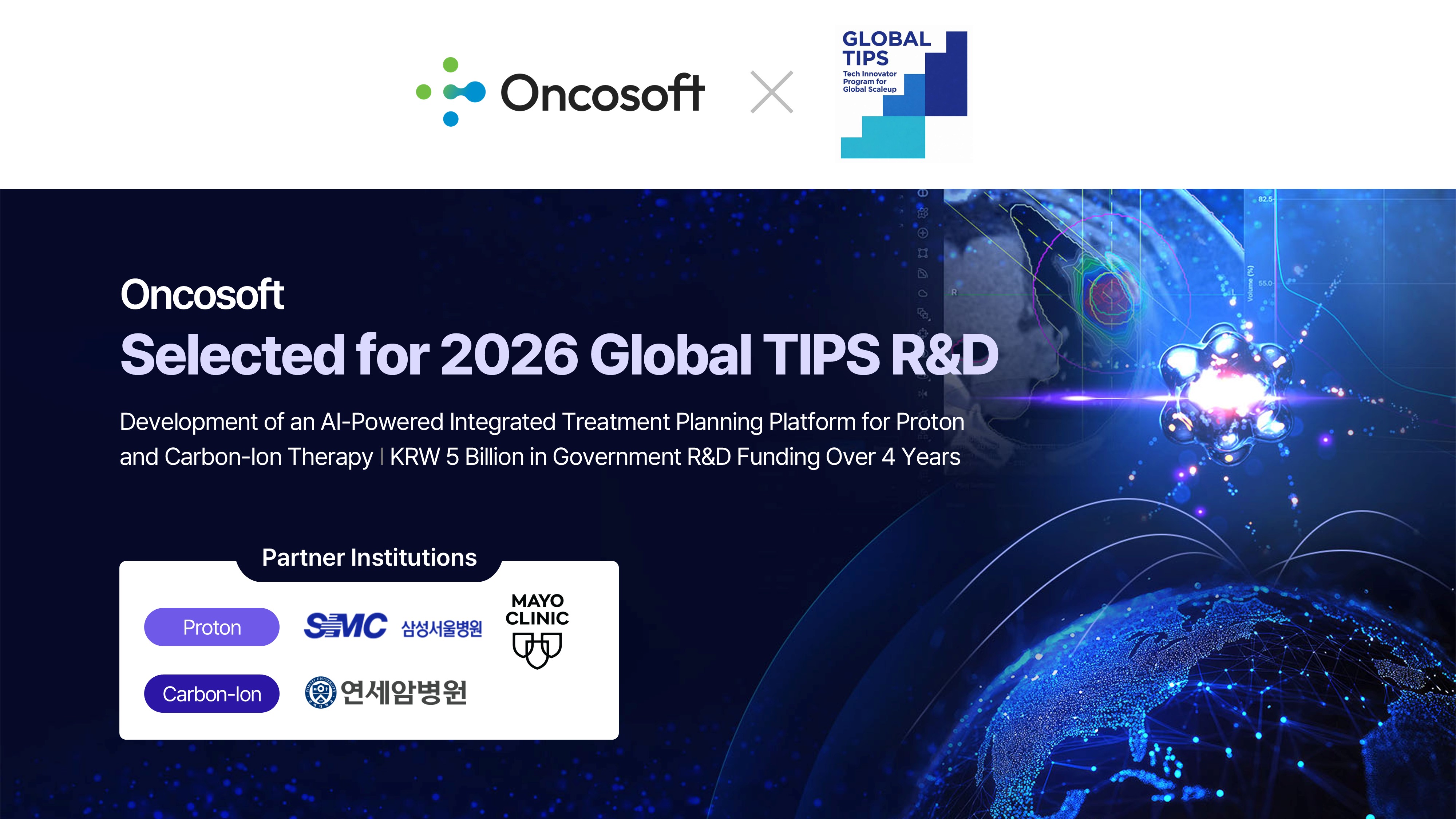
Oncosoft has been selected as the lead R&D organization for the 2026 Global TIPS Program, supported by Korea’s Ministry of SMEs and Startups, with the formal agreement process currently underway.
Running from July 2026 through June 2030, the project will have a total budget of KRW 6.67 billion, including approximately KRW 5 billion in government funding. The project aims to develop and globally commercialize OncoPlan, an AI-based Multi-Particle Treatment Planning System (TPS) designed to support both carbon-ion and proton therapy within a single platform.
The project will be supported by a strong global network of leading particle therapy institutions. Through international collaborative research with Mayo Clinic and other institutions, Oncosoft plans to conduct clinical validation of proton and carbon-ion treatment planning while also establishing global clinical references.
The radiation therapy treatment planning software market has traditionally been dominated by a limited number of overseas vendors, resulting in high costs and continued dependence on foreign technologies. By combining its independently developed technology with multinational clinical validation, Oncosoft aims to provide an alternative to this highly concentrated market structure and establish its own competitive position in the global market.
In Korea, Oncosoft will form a consortium with Yonsei Cancer Center and Samsung Medical Center to conduct advanced clinical validation for carbon-ion and proton therapy. The company plans to pursue regulatory approvals and certifications for the resulting platform, beginning with Korea’s Ministry of Food and Drug Safety (MFDS), followed by the U.S. Food and Drug Administration (FDA), CE marking under the European Union Medical Device Regulation (EU MDR), and Japan’s Pharmaceuticals and Medical Devices Agency (PMDA).
Building on its selection for Global TIPS, Oncosoft plans to complete its full-stack OncoSuite platform by integrating OncoPlan with its existing core solutions, OncoStudio and OncoFlow, while advancing the localization and global commercialization of particle radiation therapy software. |
|
|
❷ [R&D Focus] Oncosoft Expands Next-Generation Radiation Therapy R&D from Treatment Planning to Adaptive Therapy and Verification |
|
|
Oncosoft has recently expanded its R&D activities through participation in several major national projects focused on next-generation radiation therapy technologies. Across emerging treatment platforms including RADEXEL’s Magnetic Precision Radiation Therapy (MPRT) technology for active dose distribution control, the domestically developed X-band K-LINAC and ultra-high-dose-rate FLASH therapy, Oncosoft is contributing to the development of treatment planning systems (TPS), AI-based adaptive radiation therapy (Adaptive RT) and record-and-verify (R&V) systems.
1️⃣ Pan-Ministry Advanced Medical Device R&D Program – Development of TPS, OIS and Adaptive RT for RADEXEL’s Magnetic Precision Radiation
Oncosoft is participating as a collaborative R&D organization in the Global Flagship Medical Device Development project under the 2026 Pan-Ministry Advanced Medical Device R&D Program. The consortium is led by RADEXEL INC. and includes Asan Medical Center, the Korea Atomic Energy Research Institute (KAERI), SEC co.,ltd., the Korea Testing Laboratory (KTL) and Oncosoft.
The project aims to develop a next-generation radiation therapy system based on RADEXEL’s Magnetic Precision Radiation Therapy (MPRT) technology, which uses magnetic fields to control the movement of secondary electrons generated during radiation delivery, allowing the dose delivered to normal tissues to be controlled more precisely.
Oncosoft will develop dose calculation and treatment planning technologies that reflect the characteristics of the MPRT-based active dose distribution control radiation therapy system, while also integrating oncology information management, record-and-verify and Adaptive RT capabilities. Through this work, the project will progressively establish an adaptive treatment workflow that enables treatment plans to be adjusted in response to anatomical changes in individual patients.
2️⃣ Korea Electrotechnology Research Institute Strategic Research Program – Development of an AI-Based Adaptive Radiation Therapy Planning System for the Domestic K-LINAC
Oncosoft is participating as a commissioned R&D organization in the Patient-Specific Domestic High-Performance Radiation Cancer Treatment System project led by the Korea Electrotechnology Research Institute (KERI).
The project aims to develop the K-LINAC by integrating a domestically developed X-band linear accelerator with image guidance, integrated control and AI-based adaptive radiation therapy technologies.
Oncosoft is developing an AI-based treatment planning system for the K-LINAC, integrating dose calculation, IMRT treatment plan optimization and AI auto-contouring capabilities. The system will then be progressively advanced toward adaptive radiation therapy planning through treatment plan validation reflecting the actual characteristics of the treatment machine and integration with the Treatment Integrated Control System (TICS).
3️⃣ Korea Research Institute of Standards and Science Strategic Research Program – Development of a Record-and-Verify System for FLASH Radiation Therapy
In the field of ultra-high-dose-rate FLASH radiation therapy, Oncosoft is participating as a commissioned R&D organization in a national strategic research project to develop a one-second FLASH radiation cancer treatment system, led by the Korea Research Institute of Standards and Science (KRISS).
The project aims to jointly develop a treatment machine, dosimetry technologies, treatment planning software and record-and-verify software based on FLASH therapy, which delivers radiation at an extremely high dose rate over a very short period of time.
Oncosoft is developing an R&V system that manages and verifies whether treatment planning information is accurately transferred to the treatment machine and properly recorded during treatment. The project will ultimately integrate the TPS developed by the Korea Institute of Radiological & Medical Sciences (KIRAMS), Oncosoft’s R&V system and SEC co.,ltd.’s FLASH treatment system to validate the complete workflow from treatment planning through treatment delivery.
Through these three projects, Oncosoft’s R&D scope is expanding beyond AI contouring into treatment planning, adaptive radiation therapy, oncology information management and record-and-verify technologies. By participating in the development of multiple next-generation radiation therapy platforms, including RADEXEL’s MPRT system, K-LINAC and FLASH, Oncosoft is building software expertise tailored to different treatment systems and clinical environments, while strengthening the foundation for future product development and clinical application. |
|
|
❸ Oncosoft Participates in the Medical Innovation Conference at K-HOSPITAL+ HEALTH TECH FAIR 2026, with CEO Jin Seung Kim Presenting “Opening the Next Chapter in Cancer Treatment” |
|
|
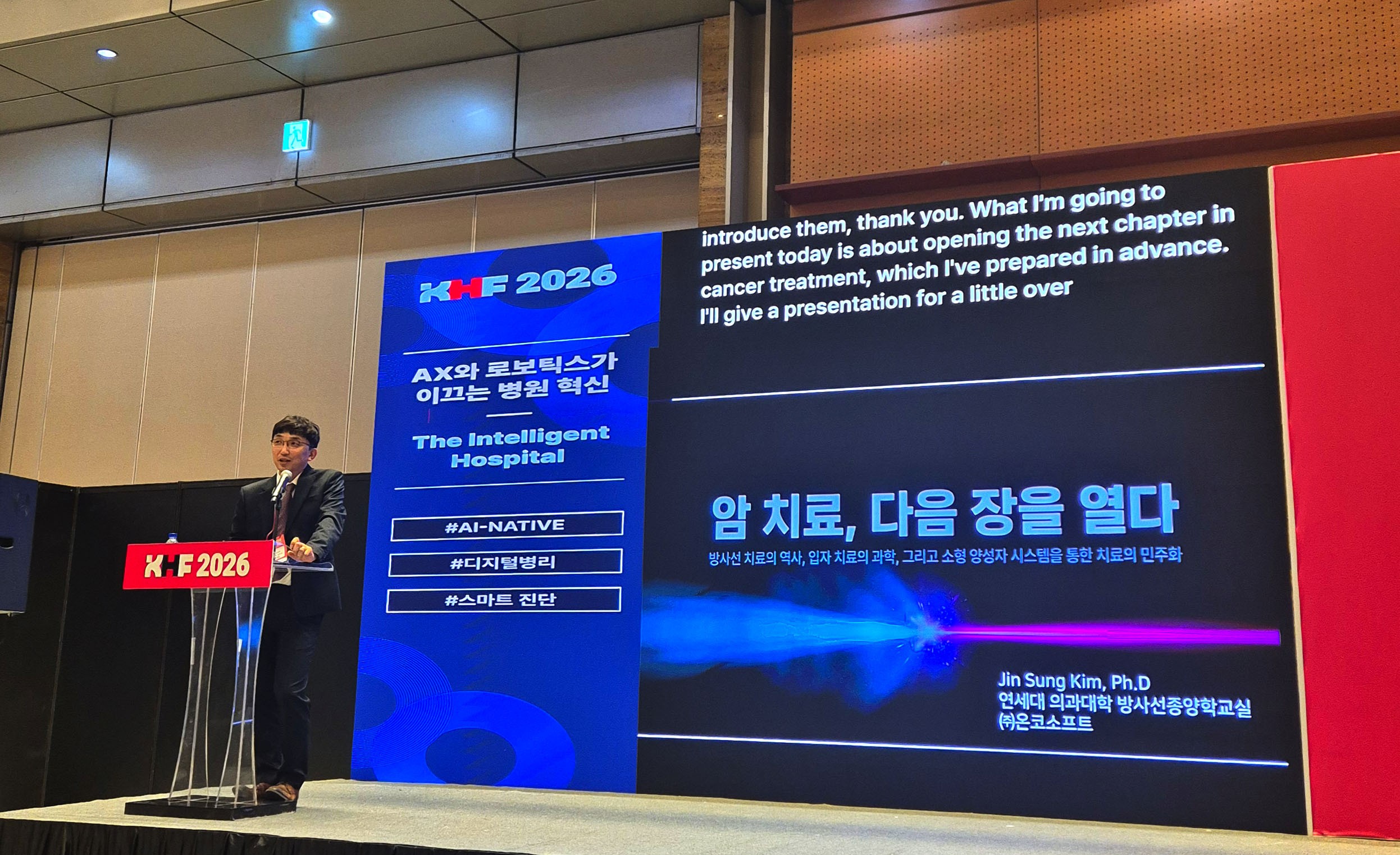
Oncosoft participated in the Medical Innovation Conference at K-HOSPITAL+ HEALTH TECH FAIR 2026, held at COEX in Seoul beginning on August 19, presenting its vision for the future of radiation therapy.
KHF 2026 focused on the concept of the “AI-native hospital,” where hospital operations are connected through AI and data. As a company driving digital healthcare innovation in cancer treatment, Oncosoft shared its perspective on how emerging technologies can be translated into practical clinical applications.
Speaking in the first session on the opening day, CEO Jin Seung Kim, Professor of Radiation Oncology at Yonsei University College of Medicine, delivered a presentation titled “Opening the Next Chapter in Cancer Treatment.”
Dr. Kim highlighted the evolution of radiation therapy from X-rays, which behave as electromagnetic waves, to particle-based treatments using protons and carbon ions. In particular, he explained the clinical value of particle therapy through the physical characteristics of the Bragg peak, which enables particles to deposit maximum energy at the depth of the tumor before rapidly stopping, thereby allowing highly precise tumor targeting while preserving surrounding normal tissues.
Dr. Kim also discussed recent technological developments designed to overcome the traditional limitations of particle therapy systems, which historically required enormous capital investment and facilities of approximately 16,500 square meters, or 5,000 pyeong.
He introduced emerging solutions including compact cyclotron systems that can be integrated into conventional radiation therapy rooms, or LINAC vaults, as well as technologies that position patients upright to reduce the mechanical constraints associated with large rotating systems. These developments are helping make particle therapy increasingly accessible beyond large-scale medical centers, bringing the industry closer to the “democratization of cancer treatment.”
As particle therapy infrastructure continues to expand globally, Oncosoft plans to combine its specialized AI technologies with these advances to help bring safer and more precise cancer treatment to a broader range of patients worldwide. |
|
|
❹ Oncosoft and ParagonCare Korea Sign MOU to Expand Advanced Radiation Therapy Infrastructure |
|
|
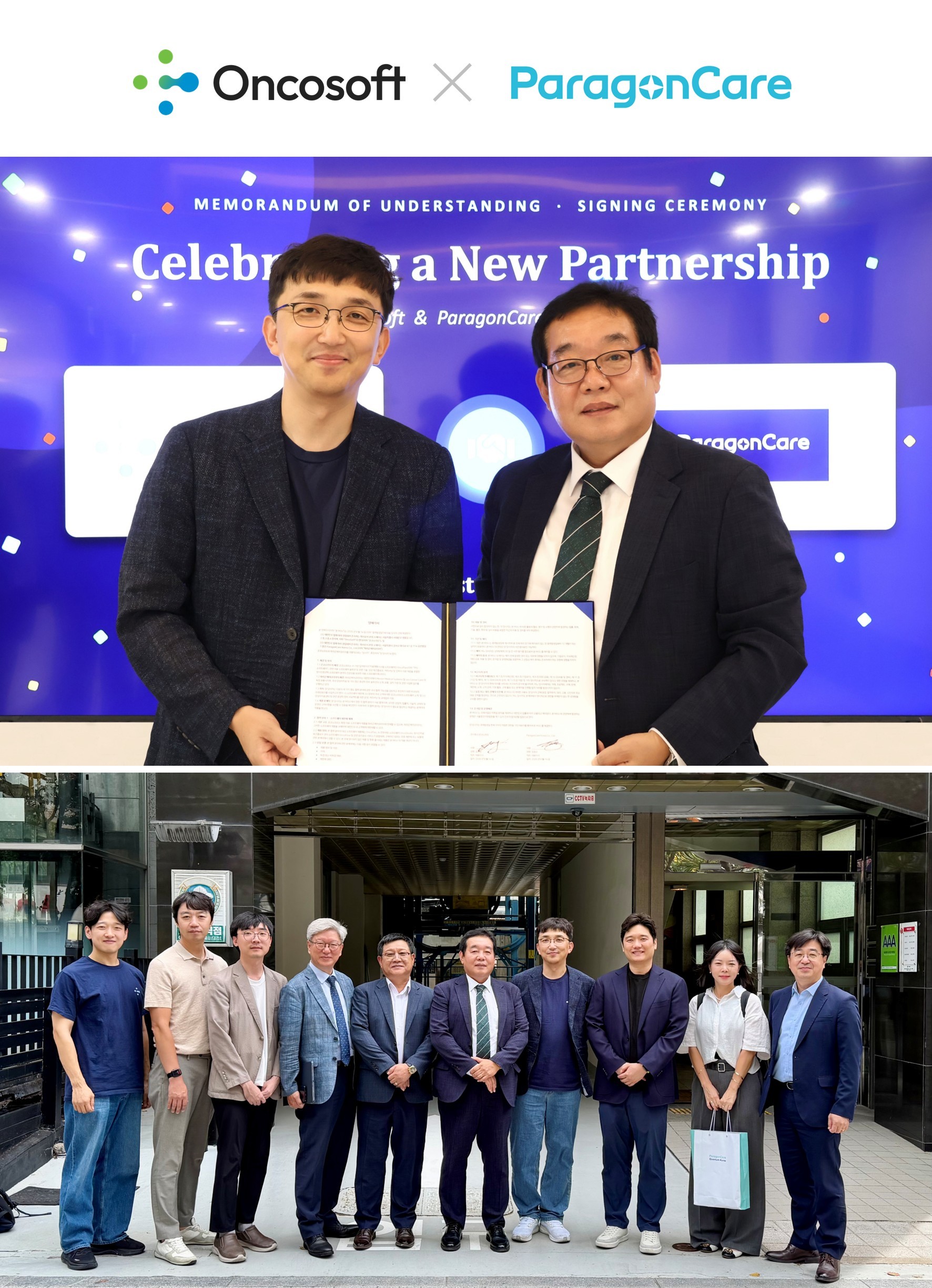
On August 14, Oncosoft signed a Memorandum of Understanding (MOU) with ParagonCare Korea, a provider of advanced oncology solutions, to expand its presence in Korea’s radiation therapy market.
ParagonCare Korea holds exclusive distribution rights in Korea for Mevion Medical Systems, a manufacturer of next-generation proton therapy systems, as well as Leo Cancer Care.
Through the agreement, the two companies will pursue multifaceted collaboration to provide solutions optimized for Korean healthcare institutions. As a first step, they plan to establish a framework for introducing and supplying Oncosoft’s AI-based radiation therapy software solutions, including OncoPlan, OncoStudio and OncoFlow, to hospitals and cancer centers through ParagonCare Korea’s extensive distribution network.
The two companies also agreed to provide comprehensive technical support for healthcare institutions introducing new proton therapy centers, covering equipment installation, commissioning and optimization, clinical workflow design and MFDS regulatory support.
The partnership brings together a global particle therapy hardware supply network with Oncosoft’s proprietary AI software technologies. Building on this collaboration, the two companies aim to maximize synergies and support the practical expansion of advanced radiation therapy infrastructure, helping healthcare professionals and patients in Korea benefit from safer and more precise treatment environments. |
|
|
❶ Oncosoft to Exhibit at AOCMP 2026 with a Dedicated Booth, Accelerating Expansion of Its Global Network |
|
|
📍 Oncosoft Booth: E13
- Dates: September 9–11, 2026
- Venue: Busan Port International Exhibition & Convention Center (BPEX)
Oncosoft will participate in AOCMP 2026 – The 26th Asia-Oceania Congress of Medical Physics [The 72nd Scientific Meeting of the Korean Society of Medical Physics], taking place in Busan from September 9 to 11, where the company will showcase its proprietary technologies.
Organized by the Korean Society of Medical Physics (KSMP), AOCMP 2026 will bring together medical physics professionals from around the world to exchange the latest developments in intelligent medical innovation and next-generation patient care technologies.
Throughout the event, Oncosoft will operate a dedicated exhibition booth to introduce its innovative AI solutions to healthcare professionals and clinical experts from across the Asia-Pacific region.
Through its participation, Oncosoft aims to strengthen collaboration with global research institutions, increase brand awareness across the Asian healthcare market and expand its business network throughout the region. |
|
|
❷ Oncosoft to Participate in PTCOG-AO 2026, Strengthening Global Partnerships and Expanding Its Presence in the Particle Therapy Market |
|
|
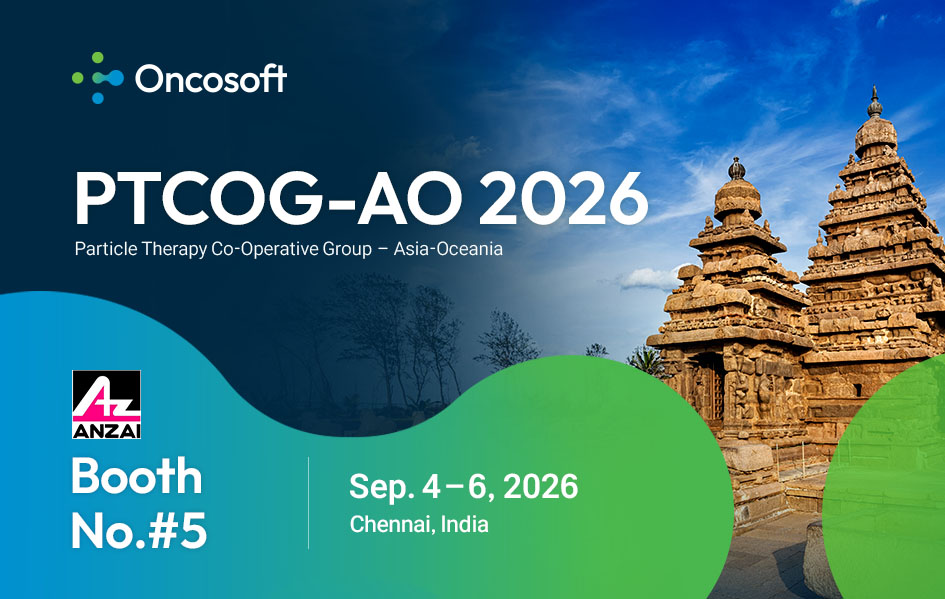
Oncosoft will participate in PTCOG-AO 2026, the 6th Annual Conference of the Particle Therapy Co-Operative Group – Asia-Oceania, taking place in Chennai, India, from September 4 to 6.
The conference brings together particle therapy specialists and industry leaders from across the region to discuss the latest advances in particle radiation therapy technologies and clinical outcomes.
At this year’s conference, Oncosoft will operate a joint booth with Anzai Medical, its key strategic partner in Japan, further strengthening the partnership between the two companies.
Through its participation, Oncosoft aims to reinforce relationships with its global partners, identify new business opportunities in the rapidly growing Asia-Pacific particle therapy market and establish a stronger foundation for continued global market expansion. |
|
|
❸ Oncosoft to Participate in ASTRO 2026, Showcasing Next-Generation AI Solutions to Accelerate Global Market Expansion |
|
|
Oncosoft will participate in ASTRO’s 68th Annual Meeting, taking place in Boston, USA, from September 26 to 30.
As one of the world’s largest radiation oncology conferences, ASTRO brings together radiation oncology professionals and global industry leaders to exchange the latest developments and emerging trends shaping the future of cancer treatment.
At the event, Oncosoft plans to highlight the advanced capabilities of OncoPlan, its proprietary AI-based treatment planning software, to an international audience.
The company will also engage with clinical experts and potential partners from the United States and other markets to explore new opportunities for technical collaboration and global commercialization. Through these activities, Oncosoft aims to further expand its global sales channels and strengthen its presence in the international radiation therapy market. |
|
|
✅ Respiratory Motion Management Series ③ — Letting the Machine Do the Breath-Holding: MANIV-DIBH
Clinicians who have used breath-hold techniques such as DIBH or EEBH in clinical practice for some time will probably recognize the real challenge: breathing cannot always be controlled as reliably as we would like.
Patients generally become better at performing breath holds with training, but that training takes considerable time and effort. Even with extensive training, some patients continue to struggle, and a patient who performs well today may have difficulty the next day. Breath-hold performance is simply not something that can always be reproduced or guaranteed with complete consistency.
It is also not easy to confirm that the intended position is being maintained during every breath hold. In the end, the process can become stressful for both patients and clinical staff.
In the previous two issues, I introduced one technique for helping patients hold their breath for longer and another for expanding the lungs without requiring a breath hold. The third technique in this series takes a different approach: using a ventilator to induce and maintain DIBH.
The technique is known as MANIV-DIBH, in which mechanically assisted non-invasive ventilation (MANIV) is used to induce deep inspiration breath hold. I first encountered it at the BRIC Symposium held in Birmingham, UK, last April. The technique was developed by researchers at Cliniques universitaires Saint-Luc in Brussels, Belgium.
Rather than asking the patient to manage the entire process of breathing and breath holding, MANIV-DIBH allows the machine to guide it. It is an interesting approach that attempts to overcome many of the practical difficulties described above.
📍A Rhythm Set by the Machine
The principle is relatively simple. A controlled level of positive pressure is delivered through a mask, causing the lungs to expand. While the higher pressure is maintained, an inspiratory plateau is created and sustained. When the pressure is lowered, the patient exhales. When the higher pressure is applied again, another inspiratory plateau begins.
In other words, the ventilator creates alternating periods of breath hold and breathing simply by controlling the pressure. The patient’s main task is to follow the rhythm set by the machine: approximately 20 to 30 seconds of breath hold, a brief period of breathing, and then another 20 to 30 seconds of breath hold.
There is no need for the patient to take an exaggerated deep breath and struggle to hold it, nor do they need to tense up while trying to respond precisely to a “Hold your breath now” command.
If FiO₂ is increased to approximately 60%, using the supplemental oxygen discussed in the June issue, patients can tolerate the same breath-hold duration much more comfortably.
Like CPAP, MANIV-DIBH uses external positive pressure to create an expanded lung volume. Because the same pressure can be applied repeatedly, it can also provide consistent positional reproducibility.
In other words, an uncertain variable that largely depends on patient effort during voluntary DIBH is replaced by a clearly defined physical parameter: pressure.
📍What Has Been Demonstrated So Far?
Early evidence for this approach came from studies by Van Ooteghem and colleagues published in 2019 (Van Ooteghem G et al. Radiother Oncol 2019;133:132–139; 2019;141:283–291).
These studies investigated whether repeated end-inspiratory plateaus could be generated using mechanical ventilation without anesthesia.
In patients with left-sided breast cancer, the ventilator inspiratory time was set to 20 seconds. Because this period included the time required for the lungs to inflate, the actual plateau duration had a median of 16.6 seconds.
This was shorter than the 20.8 seconds achieved with voluntary DIBH. However, positional variation within each plateau was only 0.8 mm, remaining below 1 mm and showing essentially no difference from voluntary DIBH, which had a variation of 0.7 mm.
No adverse events occurred among the 22 participants. There were also no cases in which the breath hold was lost midway or early positional drift occurred.
The 20-second inspiratory time, however, was a setting used in the early studies. The technique has since evolved toward inspiratory times of approximately 30 seconds, producing inspiratory plateaus of around 25 seconds.
Patients do not begin at this level immediately. During the adaptation period, the pressure and inspiratory time are gradually increased as the patient becomes accustomed to the ventilator.
The most important evidence to date comes from a randomized study of patients with left-sided breast cancer published in 2023 (Vander Veken L et al. Radiother Oncol 2023;183:109598).
A total of 66 patients were randomized equally into two groups. One group received standard voluntary DIBH guided by surface-guided radiation therapy (SGRT), while the other received MANIV-DIBH.
The co-primary endpoints were breast position reproducibility and stability, and the study was designed as a non-inferiority trial with a margin of 1 mm. |
|
|
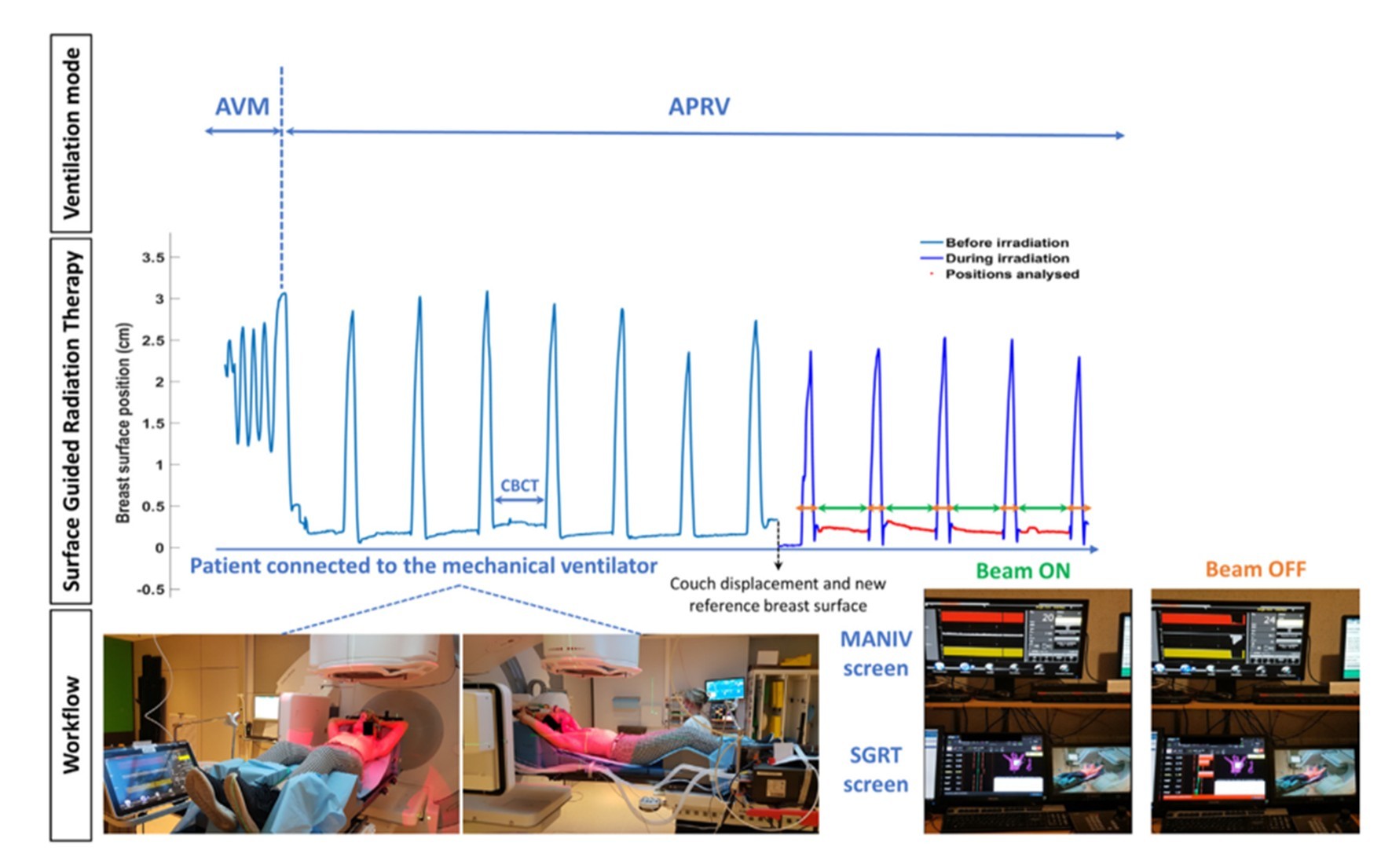
Figure 1. MANIV-DIBH treatment workflow. The patient remains connected to the ventilator throughout the treatment procedure. After adapting to spontaneous breathing under Adaptive Ventilation Mode (AVM), the ventilator is switched to airway pressure release ventilation (APRV). DIBH is created and maintained during the high-pressure phase, while the patient exhales when the pressure is lowered. Radiation delivery is gated to the high-pressure phase.
(Based on Vander Veken L et al. Radiother Oncol 2023;183:109598, Fig. 2.)
|
|
|
The differences between the two groups were less than 1 mm for both reproducibility and stability, demonstrating the non-inferiority of MANIV-DIBH (p < 0.001). Among the 2,747 breath holds performed in the MANIV-DIBH group, only 3.3% fell outside the predefined tolerance. The secondary outcomes favored MANIV-DIBH.
Compared with voluntary DIBH, the maximum dose to the left anterior descending coronary artery (LAD) decreased from 14.6 to 7.7 Gy, while the mean LAD dose decreased from 5.0 to 3.0 Gy. Left ventricular V5Gy decreased from 2.4% to 0.8%, and left lung V20Gy decreased from 11.4% to 9.7%.
Interfractional reproducibility of heart position was also better with MANIV-DIBH. The main reason for these improvements was greater lung expansion.
Compared with free breathing, lung volume increased by 6.4% with voluntary DIBH and by 13.2% with MANIV-DIBH, nearly twice as much.
There is a limit to how much patients can expand their lungs through voluntary deep inspiration alone. Mechanical assistance can achieve greater lung expansion beyond what many patients are able to reach on their own.
Patient comfort was similar between the two groups, with scores of 4.1 and 4.2 out of 5. Total treatment time was also similar, at approximately 12.5 minutes.
Treatment-room slot time, however, was longer with MANIV-DIBH: 24.0 minutes compared with 17.8 minutes, a difference of roughly six minutes. This additional time was mainly required to fit the mask, connect the patient to the ventilator, and complete the setup. Still, if the practical cost of using a ventilator is only an additional five or six minutes per treatment session, I believe that is a reasonable trade-off.
The technique has since been extended to lung and liver stereotactic body radiation therapy (SBRT). Treatment was successfully delivered in 13 of 14 patients, and PTV was reported to be reduced by 47.2% in thoracic cases and 23.3% in upper-abdominal cases compared with the ITV used under free-breathing conditions (Vander Veken L et al. Adv Radiat Oncol 2024;9:101563).
Another important advantage becomes apparent in imaging and image-guided workflows. This is not unique to MANIV-DIBH, but rather a general benefit of techniques such as DIBH and EEBH. Once respiratory motion is controlled, CBCT image quality improves, which in turn makes IGRT easier.
Pierrard and colleagues demonstrated these advantages in patients undergoing liver SABR (Pierrard J et al. Clin Transl Radiat Oncol 2025;53:100983). They prepared 25 CBCT scans acquired under free-breathing conditions and another 25 acquired during MANIV-DIBH and asked 14 operators to evaluate them in a blinded assessment. The proportion of scans rated as having “excellent” or “good” image quality was 83.4% with MANIV-DIBH, compared with 25.4% during free breathing. The proportion of assessments in which IGRT was considered easy was 68.0% versus 38.9%, while interoperator variation in image registration was also lower, at 3.2 mm versus 4.6 mm.
Particularly notable were the results for deep-learning-based auto-segmentation. The proportion of generated contours rated as “excellent” or “good” was 80.0% with MANIV-DIBH, compared with only 4.0% during free breathing. The time required for manual contour correction was also reduced by 54.2%. Given how widely auto-contouring is now used in clinical practice, this is a particularly meaningful practical advantage.
📍Our Experience at the BRIC Symposium
At the BRIC Symposium, I had the opportunity to observe the MANIV-DIBH protocol from beginning to end. A professor of medical physics from our hospital who was attending the symposium with me volunteered to try the technique personally. The entire process, including putting on the mask, gradually increasing the pressure, and repeating the breath holds, was not difficult at all. In fact, the feedback was quite positive: having the machine take the lead in pacing the breathing made the process feel considerably more comfortable.
📍Limitations
There are, of course, several limitations that need to be considered.
On rare occasions, if a patient begins breathing through the mouth rather than the nose, some of the delivered air may enter the esophagus and reach the stomach, causing gastric distension. This can occasionally occur with techniques that use positive airway pressure, and one such case has been reported with MANIV-DIBH. In the 2024 study, this was the only patient among the 14 participants who was unable to complete treatment. Gastric distension caused the liver to shift superiorly by more than 1 cm. Fortunately, when this occurs, the patient can sit upright and resume spontaneous breathing without the ventilator, allowing the air to escape naturally.
Another limitation is equipment availability. MANIV-DIBH cannot be performed with just any ventilator. The device must support the required ventilation mode, particularly airway pressure release ventilation (APRV), as well as the necessary range of pressure and timing parameters. The investigators used a Bellavista ventilator. At present, however, introducing an appropriate system for this purpose in Korea is not entirely straightforward.
📍Conclusion
Over the past three issues, I have discussed several approaches to respiratory motion management. Looking back, all three techniques begin from the same fundamental issue: in respiratory motion-managed radiation therapy, the most unpredictable variable is ultimately the human factor. Patient cooperation, physical condition on a particular day, anxiety, and fatigue can all affect treatment. MANIV-DIBH may be the approach that shifts this uncertainty furthest away from the patient and toward the machine.
In the next and final issue of this series, I will introduce NIMV-60.
Rather than forcing the patient to hold their breath, NIMV-60 keeps the lungs expanded while inducing very rapid, shallow breathing, allowing the diaphragm to remain almost stationary. It represents another approach to respiratory motion management that does not rely on a conventional breath hold. |
|
|
✅ Beyond “Made in Korea”: Designing the Future of Radiation Therapy
Oncosoft has recently joined three major radiotherapy system development projects underway in Korea. As someone who has worked in radiation oncology for many years, and as the CEO of Oncosoft, I see this opportunity as something that goes well beyond simply participating in research projects.
Korea has world-class clinicians and medical physicists, backed by extensive clinical experience. Yet the core equipment and software used in radiation therapy still rely heavily on technologies developed overseas.
I believe we have now reached a point where we can begin to envision a different future.
Over the years, Korea has built substantial technology and expertise across accelerators, imaging, precision control, AI, treatment planning, and other areas.
What we need now is to connect these capabilities. We are beginning to build the foundation not only to create complete radiotherapy systems using technologies developed here, but also to propose new treatment technologies that do not yet exist.
I see these three projects as the beginning of that change.
The first project focuses on an active dose-distribution control radiotherapy system. It aims to control secondary electrons, which are difficult to manage sufficiently with conventional X-ray therapy, using a magnetic field, while combining Adaptive RT and high-dose-rate technologies to explore new treatment possibilities. Oncosoft is responsible for developing the TPS and OIS that account for the magnetic-field environment, as well as the Adaptive RT software.
The second is K-LINAC, a patient-tailored, domestically developed high-performance radiotherapy system led by the Korea Electrotechnology Research Institute. The project brings together an X-band LINAC, spatially fractionated radiation therapy, high-precision image guidance, and AI-based Adaptive RT within a single system. Oncosoft is responsible for linking AI-based adaptive treatment planning with the integrated control system.
The third project is the development of a FLASH radiotherapy system. In this emerging field of treatment using ultra-high-dose-rate electron beams, Oncosoft is developing a dedicated OIS and Record & Verify system to help ensure that the new treatment technology can be implemented safely within actual clinical workflows.
Although the three projects involve different technologies, they share one important point.
A high-performance radiotherapy machine alone is not enough to treat patients. The entire process must work as one connected system: understanding the beam, calculating dose, identifying changes in the patient, developing the optimal treatment plan, and then delivering that plan accurately and safely on the treatment machine. And software must sit at the center of that process.
Oncosoft has been expanding its scope along this same continuum.
We started with AI contouring. But after contouring comes planning, followed by dose calculation and optimization, QA, and delivery. All of these stages need to work together as part of a coherent clinical workflow. That is why we have expanded beyond OncoStudio and OncoFlow into treatment planning, and recently obtained regulatory approval from Korea’s Ministry of Food and Drug Safety for our carbon-ion treatment planning system.
To me, this is more than an expansion of our product portfolio. It represents Oncosoft’s evolution from a company that began with AI contouring into one that can take on a broader role in radiation therapy, including some of its core processes.
And now, I believe it is time to ask a bigger question.
If the question in the past was, “Can we build our own radiotherapy systems?” the question going forward should be, “Can we be among the first to define the next generation of radiation therapy?”
Domestic development alone is not enough.
To be chosen in the global market, we need to go beyond following existing technologies. We need to create treatment solutions that are more accurate, more efficient, and safer, while also enabling new clinical value that was not previously possible.
That is one reason I am particularly excited about these three projects.
Active dose-distribution control, X-band-based patient-tailored treatment, and FLASH are not technologies with predetermined answers. They remain active areas of research and experimentation around the world. That means there is also an opportunity for us to explore new approaches and help create new possibilities.
Of course, new challenges always come with concerns.
Some may ask, “Haven’t we tried to develop Korean radiotherapy systems before?” Others may question whether large-scale R&D projects like these are the right place to invest national resources.
But I believe that past failures are also valuable experience that we have accumulated. If we build on that experience with the technologies, people, and clinical expertise we have today, the starting point for this challenge can be fundamentally different from what it was in the past.
Above all, I hope that the technologies and experience developed through these projects, as well as the process of collaboration among multiple institutions, will become valuable assets for the future of radiation therapy in Korea.
I am reminded again of a quote by Helen Keller that I have always liked:
“No pessimist ever discovered the secrets of the stars, sailed to an uncharted land, or opened a new heaven to the human spirit.” |
|
|
The path we want to take is similar.
Beyond Made in Korea, toward First from Korea.
The goal is not simply to recreate good technologies developed elsewhere with our own hands. It is to build on our own technology and experience to propose and develop new approaches to radiation therapy ahead of what exists today. I believe that is the future this challenge should ultimately lead toward.
That vision also reflects the kind of company I hope Oncosoft will become.
We began with AI contouring and have since expanded into carbon-ion treatment planning. Now we are broadening our scope further into next-generation radiotherapy systems, Adaptive RT, OIS, and the broader treatment workflow.
I envision Oncosoft as a company that, when a new treatment system emerges, can model its beam, calculate dose, use AI to understand changes in the patient, develop an optimal treatment plan, and connect that plan safely to the treatment equipment.
A company that can work alongside clinicians and researchers to find solutions when new radiotherapy technologies are needed, and carry those solutions all the way into clinical practice.
These three projects are an important beginning on the path toward that vision.
Domestic development is not our final destination.
Our goal is to help build the next generation of radiation therapy with technologies of our own, and to ensure that those technologies can be used meaningfully in real clinical practice. That is the value Oncosoft wants to create.
-Jin Seung Kim
CEO, Oncosoft
|
|
|
|